Roof Moss Removal in Honolulu, HI
Kill It at the Root, Not the Surface
Moss is the roof problem Hawaii's wet zones produce in abundance. It thrives where shade and moisture linger, on the mauka-facing slopes, under overhanging monkeypod and mango canopy, on the roof faces that never quite dry between showers. And unlike algae, which stains, moss does structural harm: its root-like anchors work under shingle edges and tile laps, it holds a wet sponge against the roof surface around the clock, and in a real downpour a thick moss mat dams water sideways under the roofing. The tempting fixes are the damaging ones. Scraping tears the anchoring structure out of the surface it grew into, and pressure washing does the same at scale. Our removal is a treatment process: an application matched to the roof material kills the moss through its anchoring structure, the mat dies and releases its grip, and it comes off in a gentle rinse, in some cases over a follow-up visit for the thickest growth, because patience here is what protects the roof. Then comes the honest part of the conversation. If your roof sits in deep shade on the wet side of the island, moss will try again, and we tell you what interval to expect and which small changes, trimming a limb, improving a drainage line, genuinely slow it down.
Moss jobs begin with mapping where the growth is and why: which faces, what shade, what the moisture source is. Treatment follows the map, heavier where the mat is established and lighter where it is starting. Thick accumulations sometimes release fully a week or two after treatment, and when that is the case we schedule the follow-up rinse as part of the job rather than calling the first pass finished. Photos document each stage.
What's Included in our Roof Moss Removal service?
Root-Level Treatment
The application reaches the anchoring structure so regrowth starts from zero.
No Scraping, No Blasting
Dead moss releases on its own; forcing it off takes roof surface with it.
Exposure-Honest Prevention
We tell you what your shade and moisture will regrow, and what actually slows it.
Comprehensive Roof Cleaning Services in Honolulu
Tailored to Your Needs
Ten services cover what actually lands on Hawaii roofs: soft-wash cleaning, moss removal, black streak treatment, coated-roof maintenance, material-specific care for tile, shingle, and metal, house washing, commercial and AOAO buildings, and the inspection that starts every honest quote. Start with the page that matches your roof.
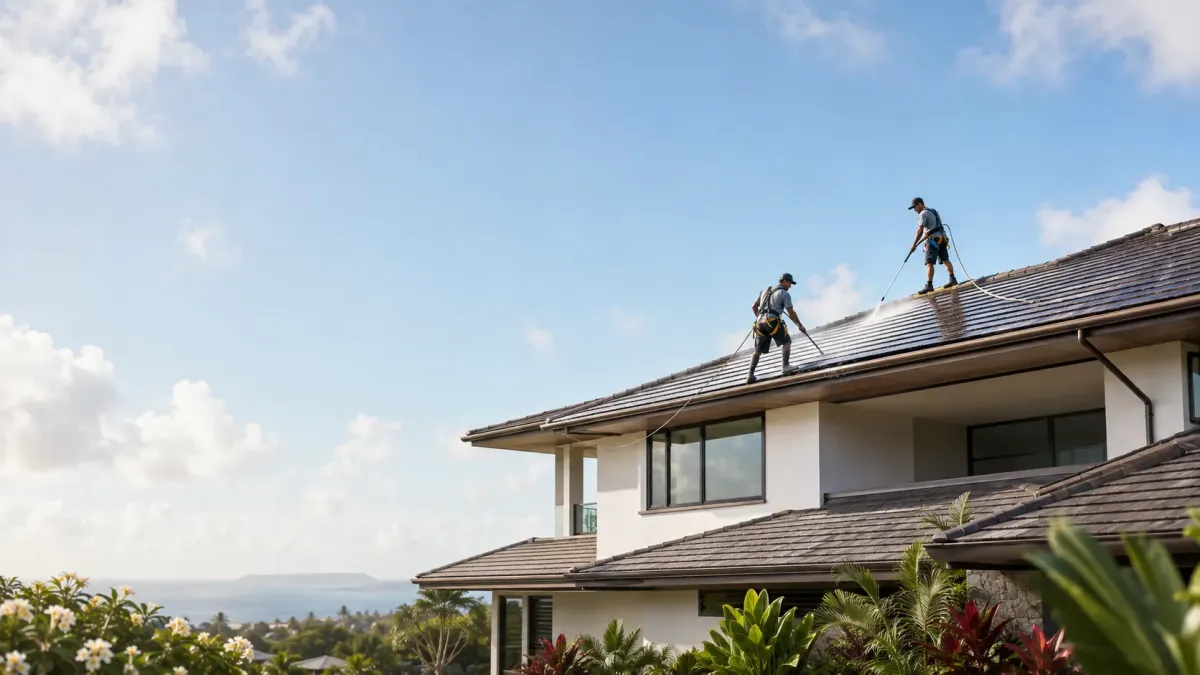
Low-pressure roof cleaning that removes growth without shortening the roof's life.
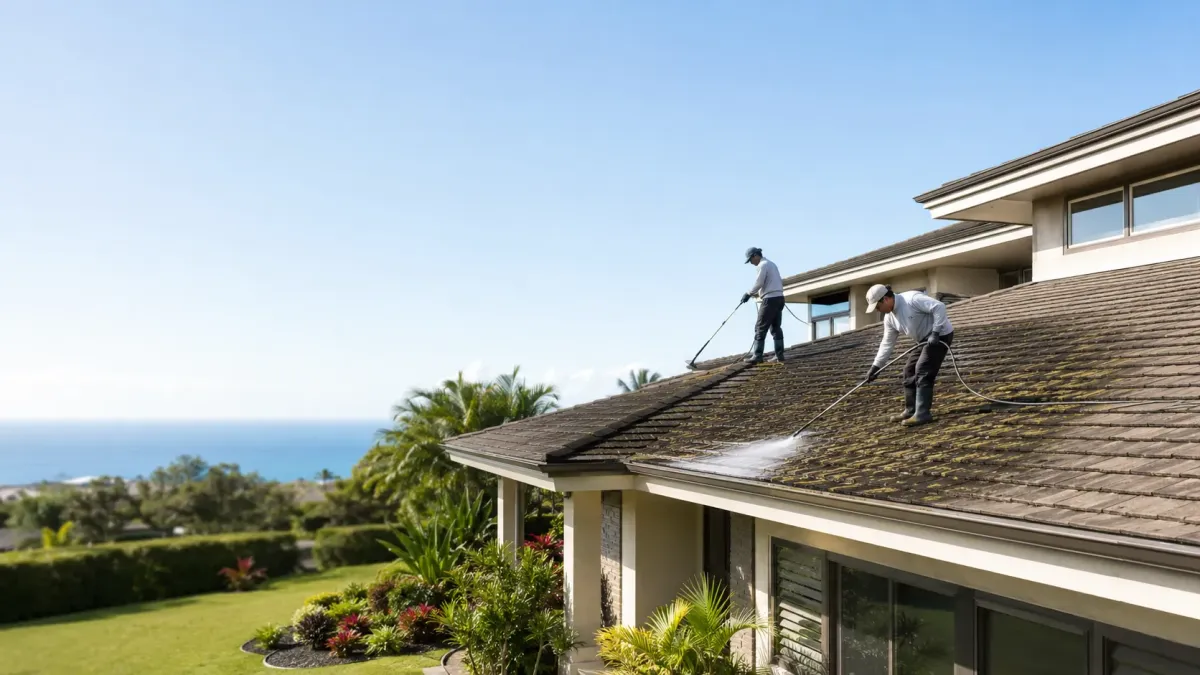
Moss treatment that kills the root structure instead of shaving the surface.
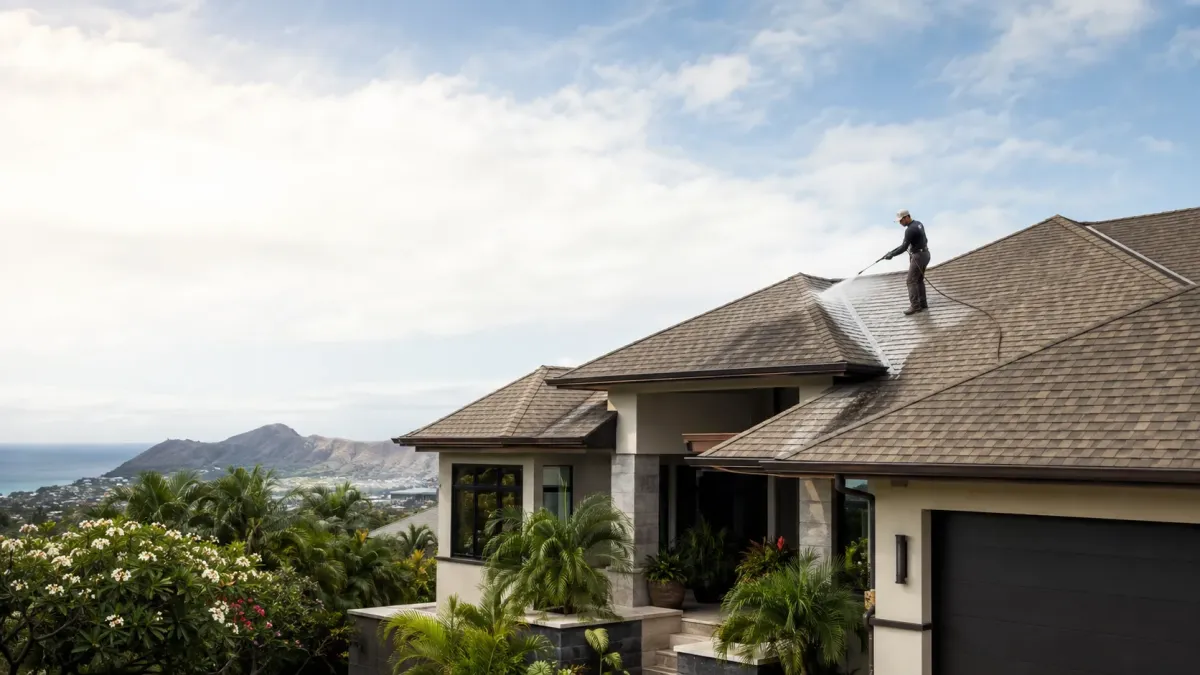
Treatment that kills the algae behind the black streaks rather than fading it.
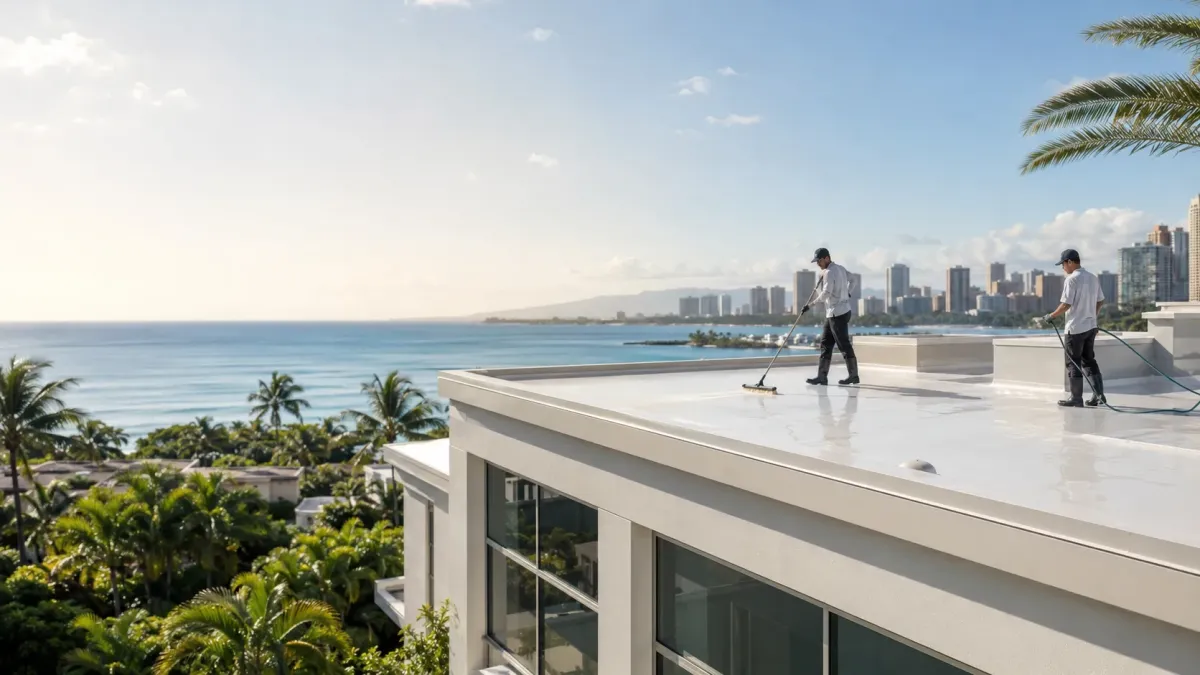
Coating-safe maintenance cleaning for Oahu's silicone-coated flat and low-slope roofs.
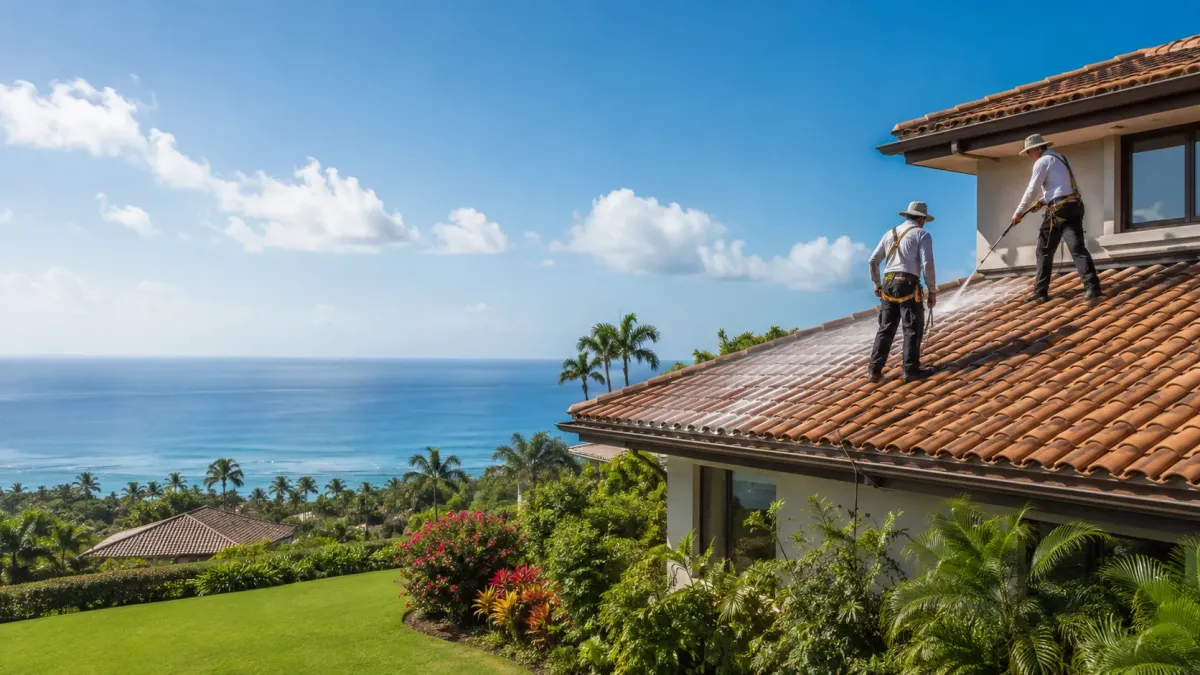
Soft-wash cleaning for clay and concrete tile, without cracking or displacement.
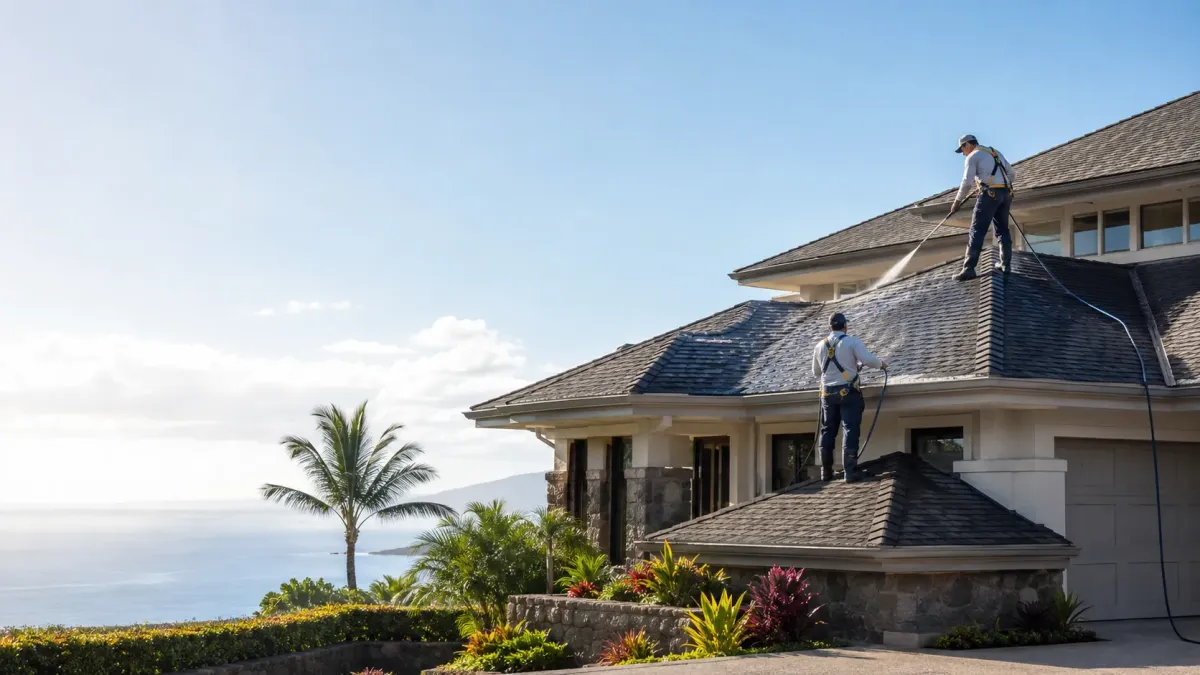
Soft-wash cleaning for asphalt shingle roofs that preserves the granule layer.
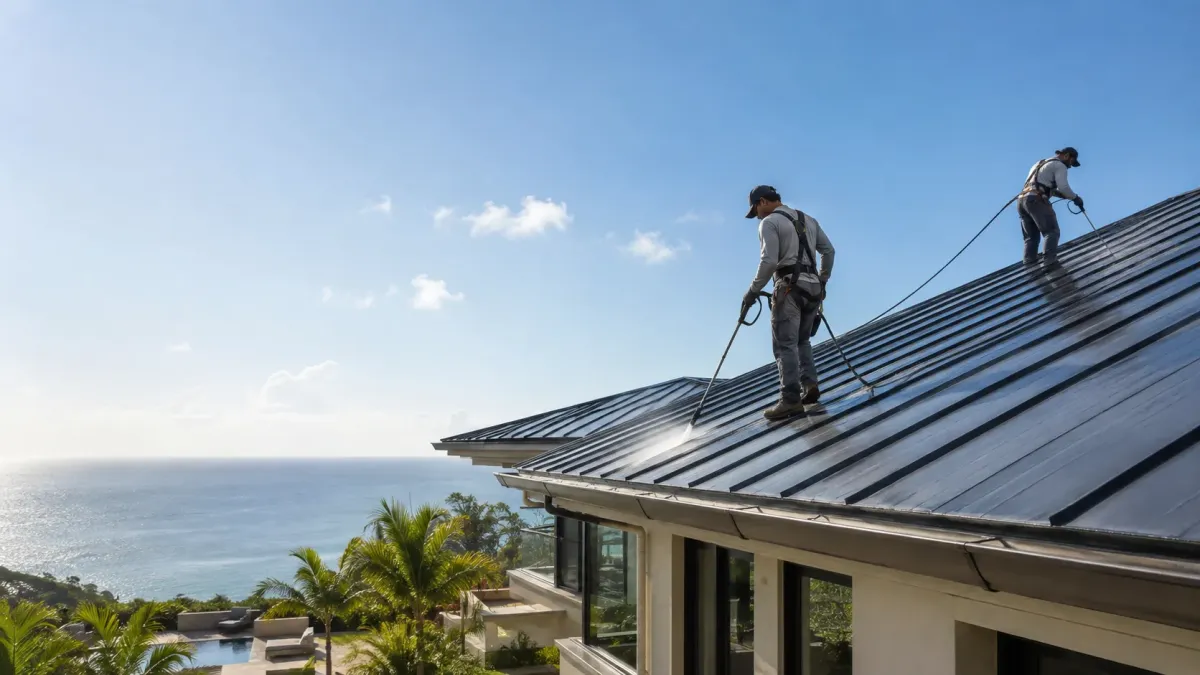
Finish-safe cleaning for corrugated and standing seam metal roofs across Oahu.
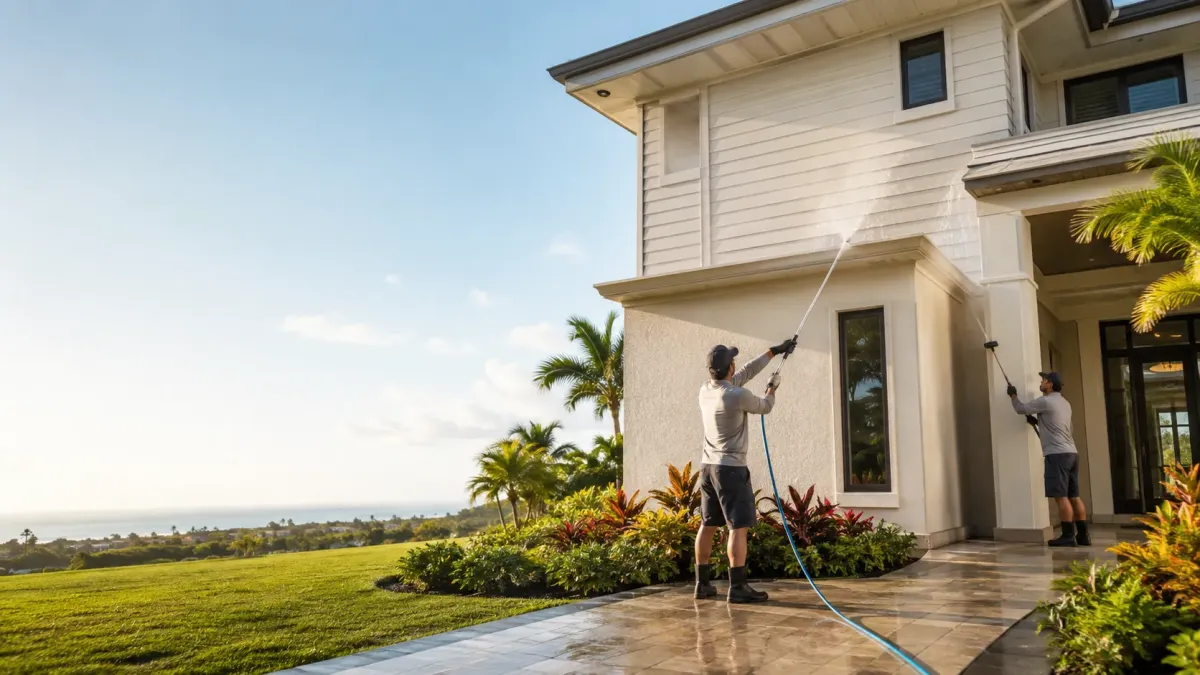
Soft-wash exterior cleaning for siding, eaves, and lanais, often paired with the roof.
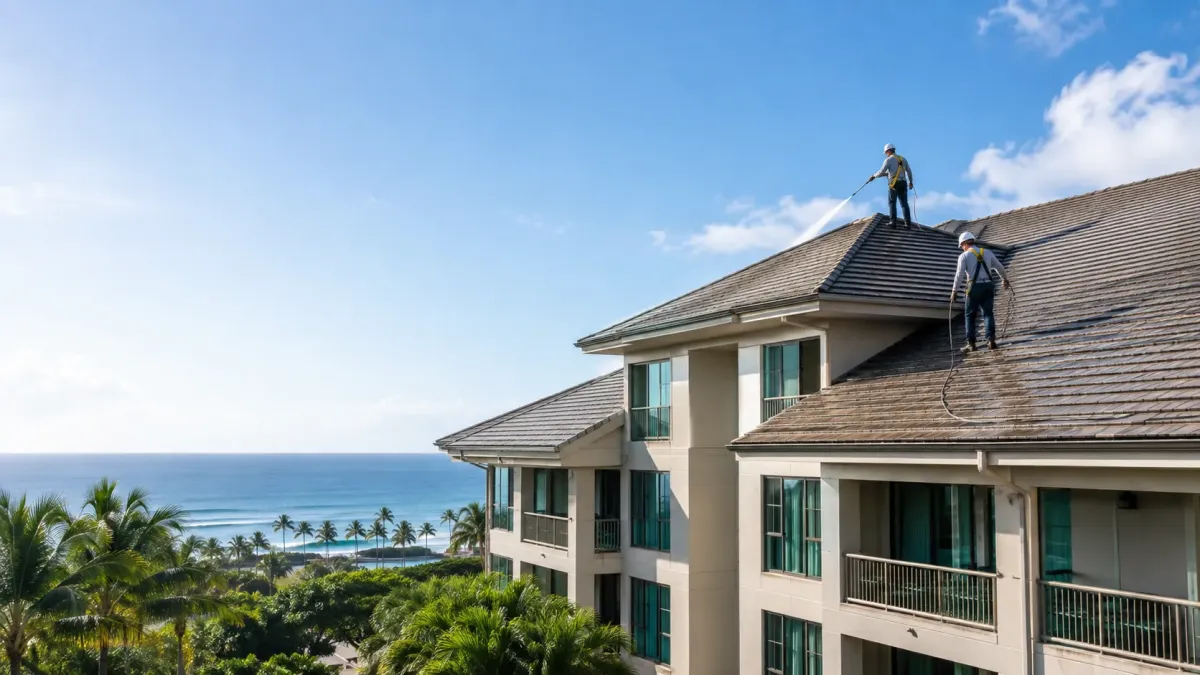
Scheduled roof cleaning programs for commercial buildings and AOAO properties.
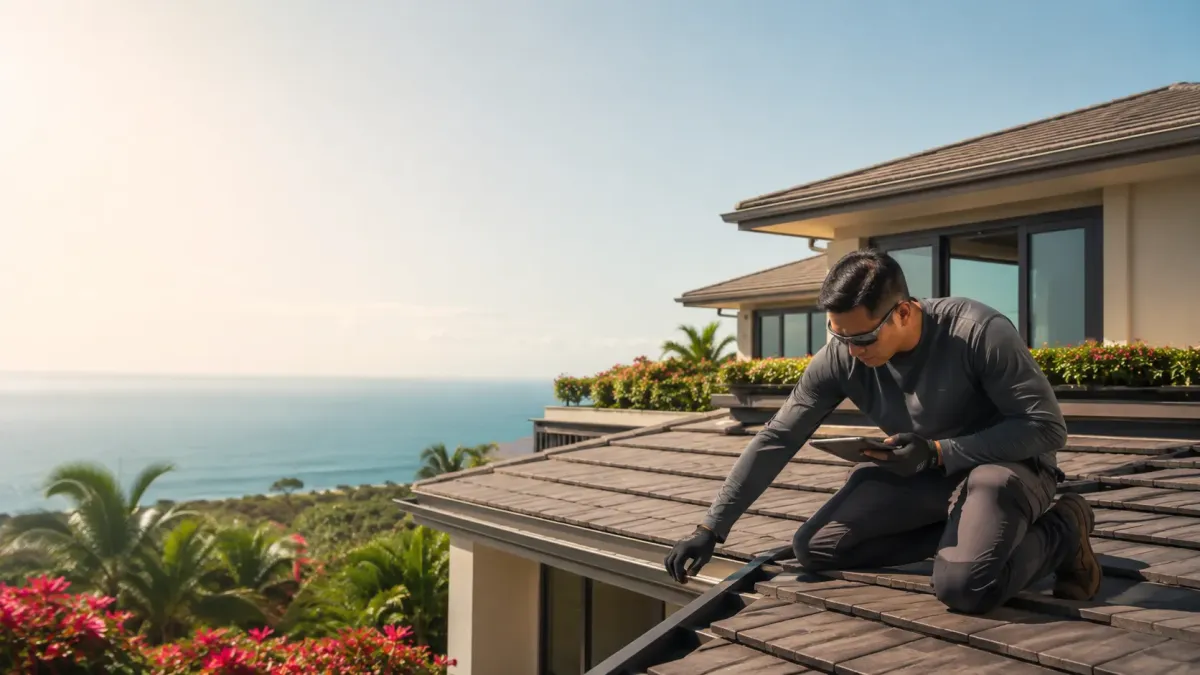
The inspection that produces a real price instead of an internet guess.
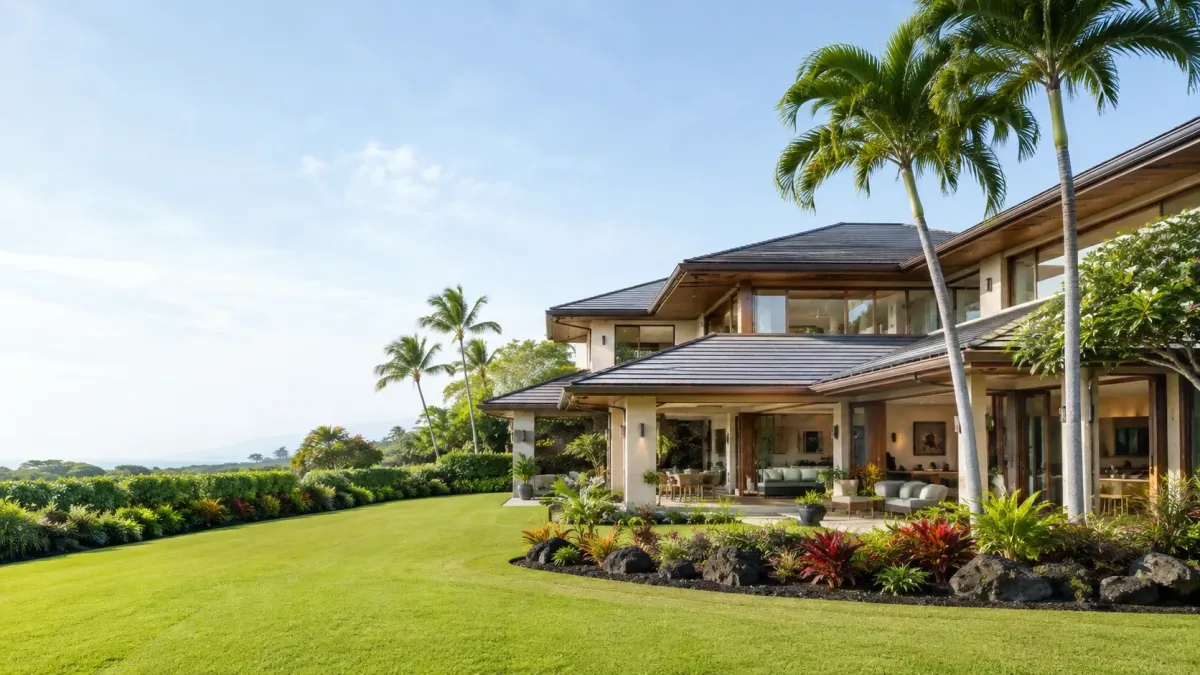
One Island, One Crew, Six Communities
Soft-wash roof cleaning for Honolulu and Oahu homes
Oahu makes service simple in one way and demanding in another. The whole island answers to the City and County of Honolulu for permits and the Board of Water Supply for water, so the paperwork never changes between towns. The roofs do: the wet windward side grows moss the dry side never sees, and the dry side bakes coatings the windward side never tests.
Frequently Asked Questions
Roof Cleaning can be complex, and we’re here to provide answers to common questions. Here are some frequently asked questions from our clients.
Frequently Asked Questions about roof cleaning Honolulu HI
How much does roof cleaning cost in Honolulu?
The honest answer is that there is no single Honolulu number, and the wildly different figures floating around online are proof that nobody pricing from a distance can see your roof. Cost follows the roof material, the pitch, the square footage, how established the growth is, and the access. We quote after an inspection, in writing, and the quote is the price.
Is soft washing safer than pressure washing for a Honolulu roof?
For nearly every roof, yes. High pressure strips the granules off asphalt shingles, cracks and displaces tile, and can void a coating warranty in one pass. Soft washing kills the growth with a low-pressure application and lets chemistry do the work the pressure would have done with force. The roof gets cleaner and keeps its remaining lifespan.
How often does a roof need cleaning in Hawaii's climate?
More often than the mainland guides suggest, because the growth never gets a winter to slow it down. What sets your interval is exposure: a shaded roof on the wet side of the island regrows faster than a sun-baked dry-side roof. We tell you the honest interval for your specific roof after the first cleaning, and for many homes it is longer than a sales-minded company would claim.
Can roof cleaning remove black streaks caused by algae in Honolulu?
Yes. The black streaks are a living algae that feeds on the roof surface, and a soft-wash treatment kills it and rinses it away rather than just fading it. Pressure washing alone spreads the spores and strips the surface. Treated correctly, the streaks are gone at the end of the job, not just lighter.
Does roof cleaning help before installing solar panels on Oahu?
It is the right sequence. Panels lock in whatever is on the roof under them, and cleaning around installed racking costs more and reaches less. A cleaned, inspected roof before installation also surfaces any repair the roof needs while it is still cheap to make. If panels are already up, we clean around them carefully and say plainly what we cannot reach.
Will the cleaning chemicals hurt my plants or catchment?
Not when the job is run properly, and this matters on a tropical lot. We pre-wet and rinse landscaping, control where runoff travels, and time applications so the solution does its work on the roof, not in your garden beds. If your home collects rainwater, tell us before the visit so the system gets isolated for the duration of the job.
Frequently Asked Questions about Roof Moss Removal
Why does my roof grow moss when my neighbor's doesn't?
Shade and drying time. Two roofs a street apart can live in different microclimates: one under tree canopy on a slope that faces away from the afternoon sun, one open to it. The roof that stays damp longest grows moss first. That is also why one face of a single roof can be green while the rest stays clean.
Can I just scrape the moss off myself?
You can, and the roof will pay for it. The anchoring structure grows into the surface, so scraping removes roofing material along with moss, and walking an unfamiliar roof to do it is its own risk. Treatment kills the moss where it anchors and lets it release without force, which is the difference between removal and damage.
Does moss actually damage a roof or just look bad?
It damages. Moss holds constant moisture against the surface, lifts shingle edges and tile laps as it thickens, and dams rainwater sideways in heavy rain. On Oahu's wet zones the growth compounds year round with no winter to check it, so an established mat is a maintenance problem, not a cosmetic one.
Will the moss come back after treatment?
If the shade and moisture stay, eventually yes, and anyone who promises otherwise is selling. What treatment changes is the starting point: regrowth begins from bare surface instead of an established mat, which takes years rather than months. We give you the honest interval for your exposure and the small site changes that stretch it.
Schedule Moss Removal in Honolulu
What Our Satisfied Clients Have to Say About
We pride ourselves on delivering great results and experiences for each client. Hear directly from home and business owners who’ve trusted us with their Roof Cleaning needs.
The Trusted Roof Cleaning Expert Near You
Ready to hear more about expert services at ?
Contact us today to receive a detailed, no-obligation quote.


